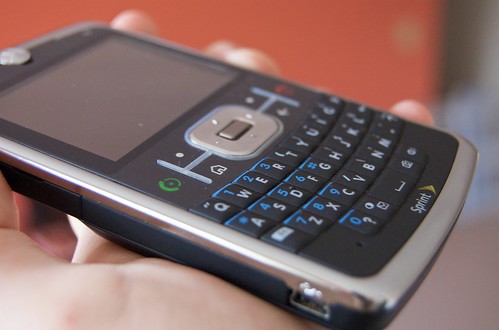
Showing posts with label cell phones. Show all posts

Saturday, September 13, 2008

The world is learning to use its collective voice like never before in communicating its thoughts, desires and opinions. This realization has become more real to me since joining my brother Todd for a conversation titled "Power to the People".

Recent news stories demonstrate how the public is bringing its influence in a more rapid fashion than has ever before been possible. After a calls to action in editorials and blogs like McLuhan's Ghost, the Green Party of Canada was able to overcome a threatened boycott, and will now take part in Canada's pre-election leaders debate.

At the same time, south of the border,
American voices are sharing their opinions of the US presidential and vice-presidential candidates thanks to the mashup work of MIBAZAAR.

I heard about my favourite voice-sharing story quite appropriately, via a radio show. The Telemegaphone project was highlighted on one of my favourite CBC podcasts, your guide to the next big thing: Spark. The Telemegaphone is a large speaker mounted to broadcast phone calls across the hills and fjords of Dale, a town in western Norway. You dial the number, and your voice is heard by the citizenry.


I'd love to see this idea reversed so that instead of this small town receiving ideas, music, and greetings from around the world; listeners around the world, could tune in to listen to commentary from small town individuals through an 'always on' Internet broadcast. This type of John Q. Public broadcasting is already happening with YouTube and Podcasting, but even simpler tools like www.earfl.com, VoiceThread and Seesmic are already making it possible for groups or random individuals to share their thoughts with their real voices.

As more and more of these applications leverage cell phone technology rather than desktop or notebook computer technology, it's easy to imagine a time when we open our cell phones to listen to geo-tagged telephone messages placed by people all around the world. Projects like Murmur and tools like GeoGraffiti are already allowing users to tap into an unseen network in order to post and/or download audio tags, historic commentary, and personal storytelling.

Who knows... Maybe one day, it will be common for educators to harvest student voices?


Photo Credit: Mirko Garufi
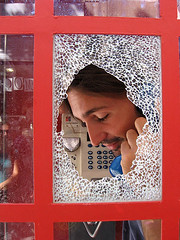
I Hear Voices

The world is learning to use its collective voice like never before in communicating its thoughts, desires and opinions. This realization has become more real to me since joining my brother Todd for a conversation titled "Power to the People".

Recent news stories demonstrate how the public is bringing its influence in a more rapid fashion than has ever before been possible. After a calls to action in editorials and blogs like McLuhan's Ghost, the Green Party of Canada was able to overcome a threatened boycott, and will now take part in Canada's pre-election leaders debate.

At the same time, south of the border,
American voices are sharing their opinions of the US presidential and vice-presidential candidates thanks to the mashup work of MIBAZAAR.

I heard about my favourite voice-sharing story quite appropriately, via a radio show. The Telemegaphone project was highlighted on one of my favourite CBC podcasts, your guide to the next big thing: Spark. The Telemegaphone is a large speaker mounted to broadcast phone calls across the hills and fjords of Dale, a town in western Norway. You dial the number, and your voice is heard by the citizenry.


I'd love to see this idea reversed so that instead of this small town receiving ideas, music, and greetings from around the world; listeners around the world, could tune in to listen to commentary from small town individuals through an 'always on' Internet broadcast. This type of John Q. Public broadcasting is already happening with YouTube and Podcasting, but even simpler tools like www.earfl.com, VoiceThread and Seesmic are already making it possible for groups or random individuals to share their thoughts with their real voices.

As more and more of these applications leverage cell phone technology rather than desktop or notebook computer technology, it's easy to imagine a time when we open our cell phones to listen to geo-tagged telephone messages placed by people all around the world. Projects like Murmur and tools like GeoGraffiti are already allowing users to tap into an unseen network in order to post and/or download audio tags, historic commentary, and personal storytelling.

Who knows... Maybe one day, it will be common for educators to harvest student voices?


Photo Credit: Mirko Garufi

Sunday, April 27, 2008

How is your school leveraging cell phone technology for student learning?

In the schools my children attend, mobile phones are not welcome. The regional district school board is jamming the genie back into the lamp, even though the use of handheld technology is ubiquitous in the real world. Rather than restrict the use of this technology, educators (and their students) would be better served, if they were actually to be encouraged to use this technology in their classrooms.


How can cell phones be used for education?


First, we have to realize that many cell phones have the many embedded tools: clock, calendar, camera, voice recorder, text messaging. Some cell phones also include access to the World Wide Web and GPS technology.

Recognizing that relatively few educators already leverage tools likeGooglemaps, Wikipedia, and today's Front page news.... How will we handle it when "all of the information in the world" arrives in student backpacks on a daily basis?

The inclination is to think of the Web as one way communication, but teachers need to recognize that handheld devices encourage participation in content creation as much as content consumption. The mobile phone provides the potential to teach about copyright; content creation; protection of privacy; ethical use and much more. So how do we go about teaching students about appropriate online participation?

Documenting Learning

Field trips, experiments, and other learning experiences can be shared with a global audience with camera phones (audio and/or video). Many ideas for using mobile phones can be found at The Mobile Learner, Wes Fryer's wiki, or Thinking Machine. Evolving tools like Jott and Utterz allow automatic voice to text posting to blogs, wikis, or social networks. If you already use Voicethread, you may be interested in the untethered use of this tool:


Liberty Science Centre in New Jersey, actually has exhibits that provide audio commenting through recordings available by phone call. Can students create such content? Can you see the day when road signs, historic markers, and public buildings include phone numbers to access information? What about copying such information to GoogleMaps?

Large Scale Mobile Learning


Abiline Christian University in Texas, provides students with iPhone technology. Many other post-secondary institutions like Berkeley, Stanford, Yale, Penn State, Texas A&M, Duke, Queens, MIT... are leveraging iTunes U. Will this soon be the norm? What about iTunes HS, or iTunes Elementary?!

What are we worried about?

Students filming lessons
? Students Googling to correct teacher errors? Students communicating with one another for social reasons? Whatever the concerns, the appropriate use of handheld computing technology needs to be modeled in the classroom. In preparing students for the real world, is teaching handheld technology skills more relevant than cursive writing; long division; spelling tests, the memorization of world capitals...?

More to follow on Monday's Teacher 2.0 Podcast.

Photo credit: Benjamin Golub

Cell Phones in the Classroom

How is your school leveraging cell phone technology for student learning?

In the schools my children attend, mobile phones are not welcome. The regional district school board is jamming the genie back into the lamp, even though the use of handheld technology is ubiquitous in the real world. Rather than restrict the use of this technology, educators (and their students) would be better served, if they were actually to be encouraged to use this technology in their classrooms.


How can cell phones be used for education?


First, we have to realize that many cell phones have the many embedded tools: clock, calendar, camera, voice recorder, text messaging. Some cell phones also include access to the World Wide Web and GPS technology.

Recognizing that relatively few educators already leverage tools likeGooglemaps, Wikipedia, and today's Front page news.... How will we handle it when "all of the information in the world" arrives in student backpacks on a daily basis?

The inclination is to think of the Web as one way communication, but teachers need to recognize that handheld devices encourage participation in content creation as much as content consumption. The mobile phone provides the potential to teach about copyright; content creation; protection of privacy; ethical use and much more. So how do we go about teaching students about appropriate online participation?

Documenting Learning

Field trips, experiments, and other learning experiences can be shared with a global audience with camera phones (audio and/or video). Many ideas for using mobile phones can be found at The Mobile Learner, Wes Fryer's wiki, or Thinking Machine. Evolving tools like Jott and Utterz allow automatic voice to text posting to blogs, wikis, or social networks. If you already use Voicethread, you may be interested in the untethered use of this tool:


Liberty Science Centre in New Jersey, actually has exhibits that provide audio commenting through recordings available by phone call. Can students create such content? Can you see the day when road signs, historic markers, and public buildings include phone numbers to access information? What about copying such information to GoogleMaps?

Large Scale Mobile Learning


Abiline Christian University in Texas, provides students with iPhone technology. Many other post-secondary institutions like Berkeley, Stanford, Yale, Penn State, Texas A&M, Duke, Queens, MIT... are leveraging iTunes U. Will this soon be the norm? What about iTunes HS, or iTunes Elementary?!

What are we worried about?

Students filming lessons
? Students Googling to correct teacher errors? Students communicating with one another for social reasons? Whatever the concerns, the appropriate use of handheld computing technology needs to be modeled in the classroom. In preparing students for the real world, is teaching handheld technology skills more relevant than cursive writing; long division; spelling tests, the memorization of world capitals...?

More to follow on Monday's Teacher 2.0 Podcast.

Photo credit: Benjamin Golub

Tuesday, March 18, 2008

It's all beginning to make sense to me! In only a few short weeks, I've gained firsthand experience at how the 'air' technologies I recently reviewed, may foreshadow a significant shift in computing.

Adobe Air's promise of innovative branded desktop applications is now evident on my computer, courtesy of a new app called Twhirl. Essentially, a developer has taken the Twitter engine and posted it within a separate 'Air' envelope that runs independent of my browser. Maybe Adobe is right, as developers have had very limited time to use the tools, I suspect that new applications will begin showing up regularly.

While I didn't purchase the newMacBook Air, I had a unique 'airy' experience in upgrading my computer this week. My new Macbook Pro did indeed come with a disk drive, but believe it or not, I installed all of my software, and transferred all of my documents, with nary the involvement of the optical drive! Even installing MS Windows (I went with XP) and MS Office was done by downloading disk images that installed with key codes that were provided via email. Maybe Apple is right... maybe disk drives will become obsolete sooner than we expect?

Even though I downloaded fairly bloated Microsoft programs, I think that we may be about to have a Renaissance of sorts in the development of low memory, micro-coded 'air' programs that I suspect will be provided for 'free'. The tools used to produce new streamlined applications are already available to developers at low or no cost. In addition to Adobe Air, the tea leaves to consider include:Adobe Air, Ruby on Rails, Android (the Google phone software), or the Apple iPhone Developer Program.

Is this important? YES! Consider that many of the applications under development will run on telephones and that both the applications and the phones will be provided at low or no cost, and we will have ubiquitous computing. In my opinion, this is how education will finally achieve 1:1 computing (if not an even higher ratio!).

I also think that very soon, the term cell phone will be inadequate to describe the communication devices we will be using. For the record, I support the move to start calling these things 'communicators'.


Additional content is available on the spring equinox episode of the Teacher 2.0 Podcast.

Photo Credit: TCM Hitchhiker (Jason)

Change is in the Air...

It's all beginning to make sense to me! In only a few short weeks, I've gained firsthand experience at how the 'air' technologies I recently reviewed, may foreshadow a significant shift in computing.

Adobe Air's promise of innovative branded desktop applications is now evident on my computer, courtesy of a new app called Twhirl. Essentially, a developer has taken the Twitter engine and posted it within a separate 'Air' envelope that runs independent of my browser. Maybe Adobe is right, as developers have had very limited time to use the tools, I suspect that new applications will begin showing up regularly.

While I didn't purchase the newMacBook Air, I had a unique 'airy' experience in upgrading my computer this week. My new Macbook Pro did indeed come with a disk drive, but believe it or not, I installed all of my software, and transferred all of my documents, with nary the involvement of the optical drive! Even installing MS Windows (I went with XP) and MS Office was done by downloading disk images that installed with key codes that were provided via email. Maybe Apple is right... maybe disk drives will become obsolete sooner than we expect?

Even though I downloaded fairly bloated Microsoft programs, I think that we may be about to have a Renaissance of sorts in the development of low memory, micro-coded 'air' programs that I suspect will be provided for 'free'. The tools used to produce new streamlined applications are already available to developers at low or no cost. In addition to Adobe Air, the tea leaves to consider include:Adobe Air, Ruby on Rails, Android (the Google phone software), or the Apple iPhone Developer Program.

Is this important? YES! Consider that many of the applications under development will run on telephones and that both the applications and the phones will be provided at low or no cost, and we will have ubiquitous computing. In my opinion, this is how education will finally achieve 1:1 computing (if not an even higher ratio!).

I also think that very soon, the term cell phone will be inadequate to describe the communication devices we will be using. For the record, I support the move to start calling these things 'communicators'.


Additional content is available on the spring equinox episode of the Teacher 2.0 Podcast.

Photo Credit: TCM Hitchhiker (Jason)