 With this common interest, it's no surprise that our conversation consistently returns to the use of the Internet, and a wide range of teaching and learning applications. While waiting for our meals to arrive at our table, I suggested that traditional tests might be rendered useful, if we were to teach students how to cheat in completing them.
While it may sound radical to encourage cheating, students today have grown up in a culture that generally accepts a variety of unsavoury behaviours:
* finding and sharing 'cheat' codes for video games;
* bypassing digital rights management on CD and DVD media;
* using proxy servers to access filtered/blocked/banned web content;
* downloading applications from the web and using 'cracks' to gain access;
* accessing private networks, whether open or password protected;
* cracking digital devices to expand their functionality beyond licensing agreements;
* creating unique works by appropriating the unlicensed photographic or musical expertise of others;
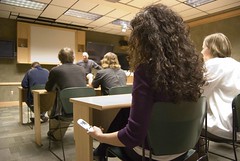 It's no secret that I am on unfriendly terms with the traditional test, so if I had to give students a test today, I think I'd challenge them to respond with limited restrictions. I might allow them to talk to one another; to copy from one another; or to access the internet or outside experts.
What skills might students develop in sanctioned cheating?
In a group or class test:
In copying content from other students, each learner would have to apply critical thinking skills in validating responses. If a class or group had to submit one complete test for the entire group, you'd really be able to assess the collaborative skills possessed by a group or sub-groups. Without a doubt, an observant teacher would be able to see which students had the greatest sharable 'capital', and which had the most effective leadership skills.
In an open book test:
Students would have to condense material into it's most important elements, and would have to organize their resources so that appropriate content could be efficiently accessed.
In a test to design a cheating tool:
Students would highlight their varied abilities to innovate in creating unique uses for personal digital devices; or they might demonstrate their creativity in re-purposing common backpack or lunchbox objects.
In an open computer test:
Beyond exhibiting their search skills, students would be challenged to assess the validity of their sources. Another important skill might be embedded in this activity, were a teacher to require students to provide more than one reference for any test response.
In an open phone test:
Students might have to budget a limited number of text messages or phone-a-friend calls, meaning they'd have to assess their areas of greatest need. Could metacognition skills actually be testable?!
Here's your test question... Use any source you like, but in posting your response below, reference your source(s), and try to provide a level of confidence in your answer.
"How many different times have human beings been to the moon?"
C'mon, you can answer that one can't you? Go ahead and cheat if you like!
Photo Credit: Mr. Stein; Billaday


0 comments:
Post a Comment